Agia Roumeli
Wild, remote and a little rough around the edges — and all the better for it.
A village at the edge of the map
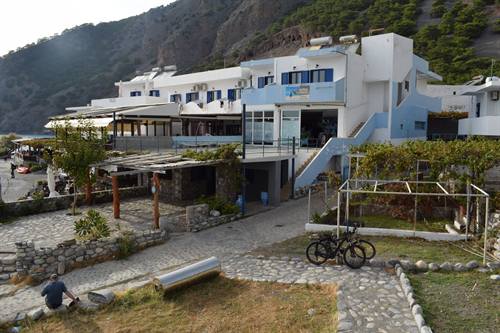
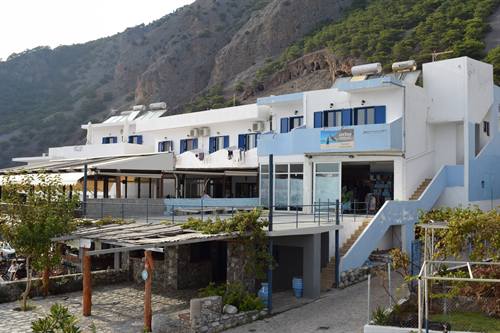
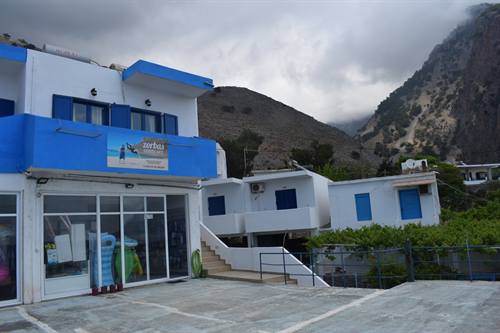
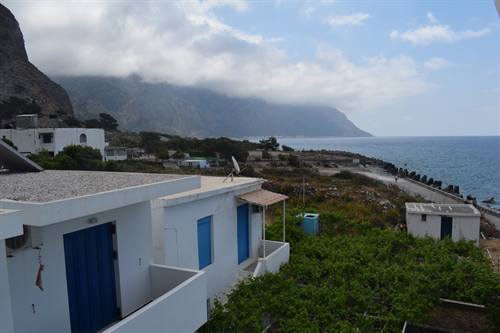
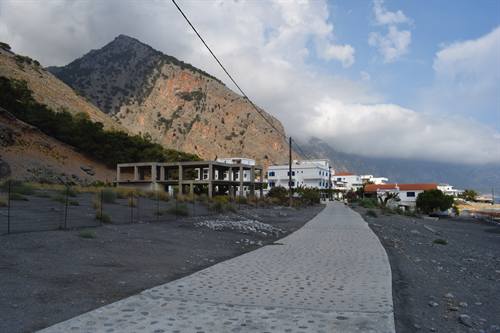
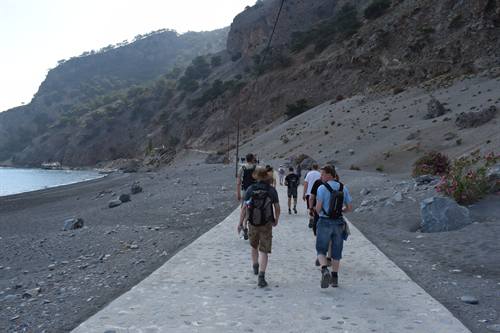
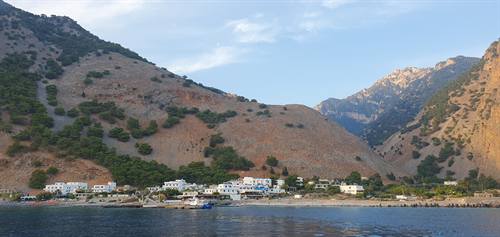
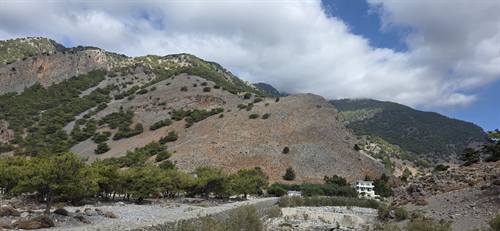
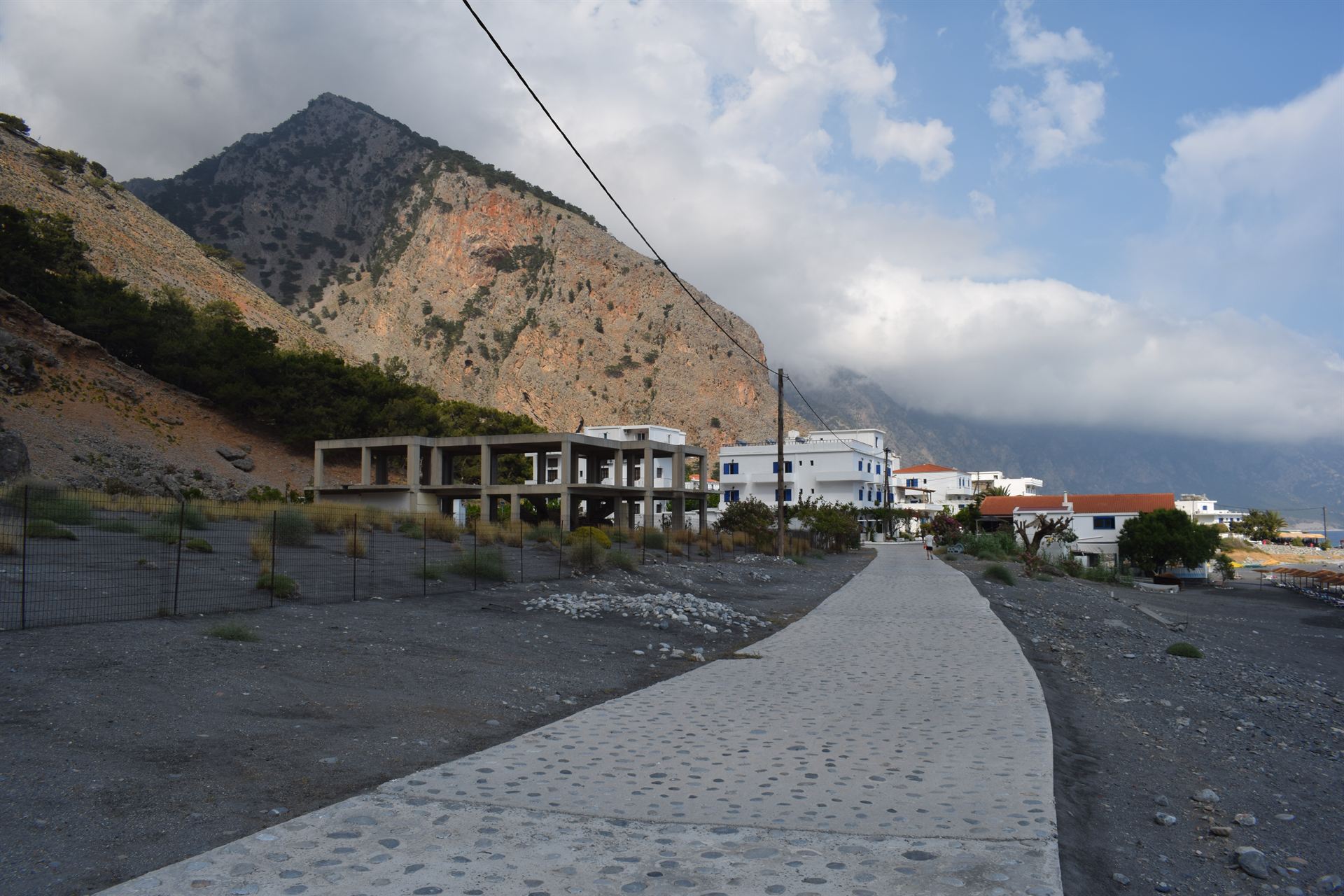
Agia Roumeli sits where the Samaria Gorge opens onto the Libyan Sea, hemmed in by mountains on every side. No road reaches it — you arrive on foot through the gorge or by boat along the coast. The beach is black pebbles, the sea is deep and often rough, and the whole place has a raw, untamed feel you simply won't find on the polished north coast of Crete. The people are warm, the food is good, and the nights are unforgettable.
Black beach & rough sea
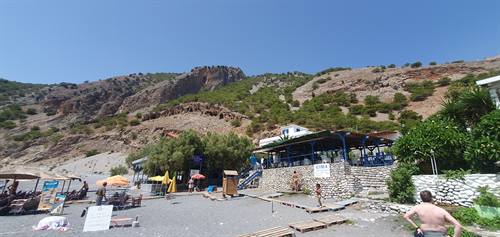
Long stretches of black pebble and clear, deep water. The sea here has moods — wild one day, glassy the next — and you can swim right off the village.
Tavernas & kiosks
Family-run tavernas serve fresh fish and honest Cretan cooking by the water, with kiosks and friendly bars for a long, slow evening.
Ruins & history
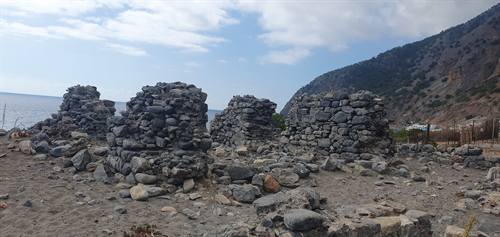
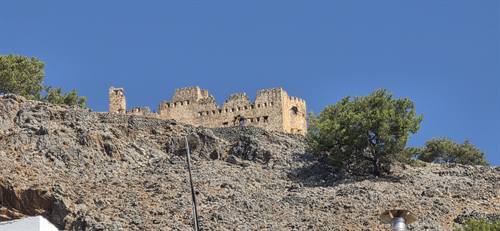
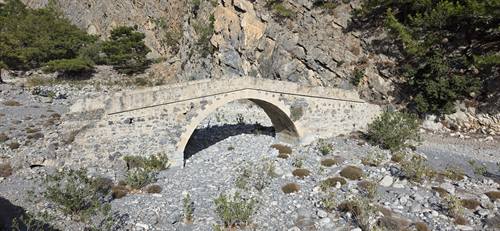
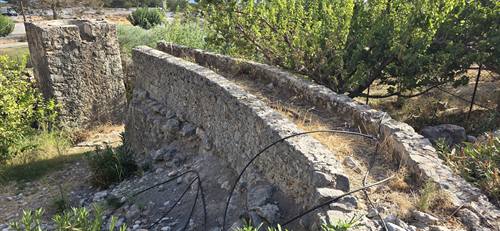
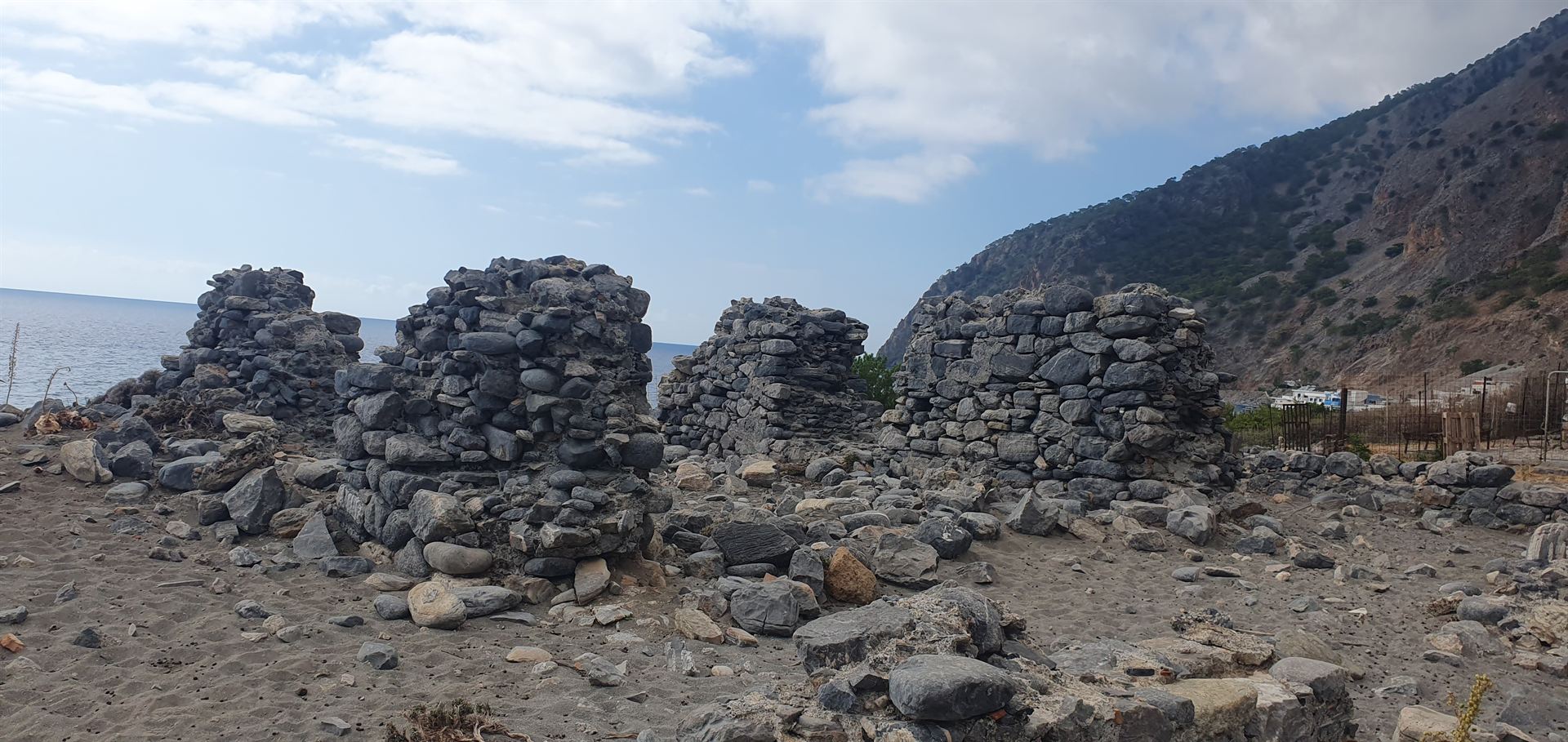
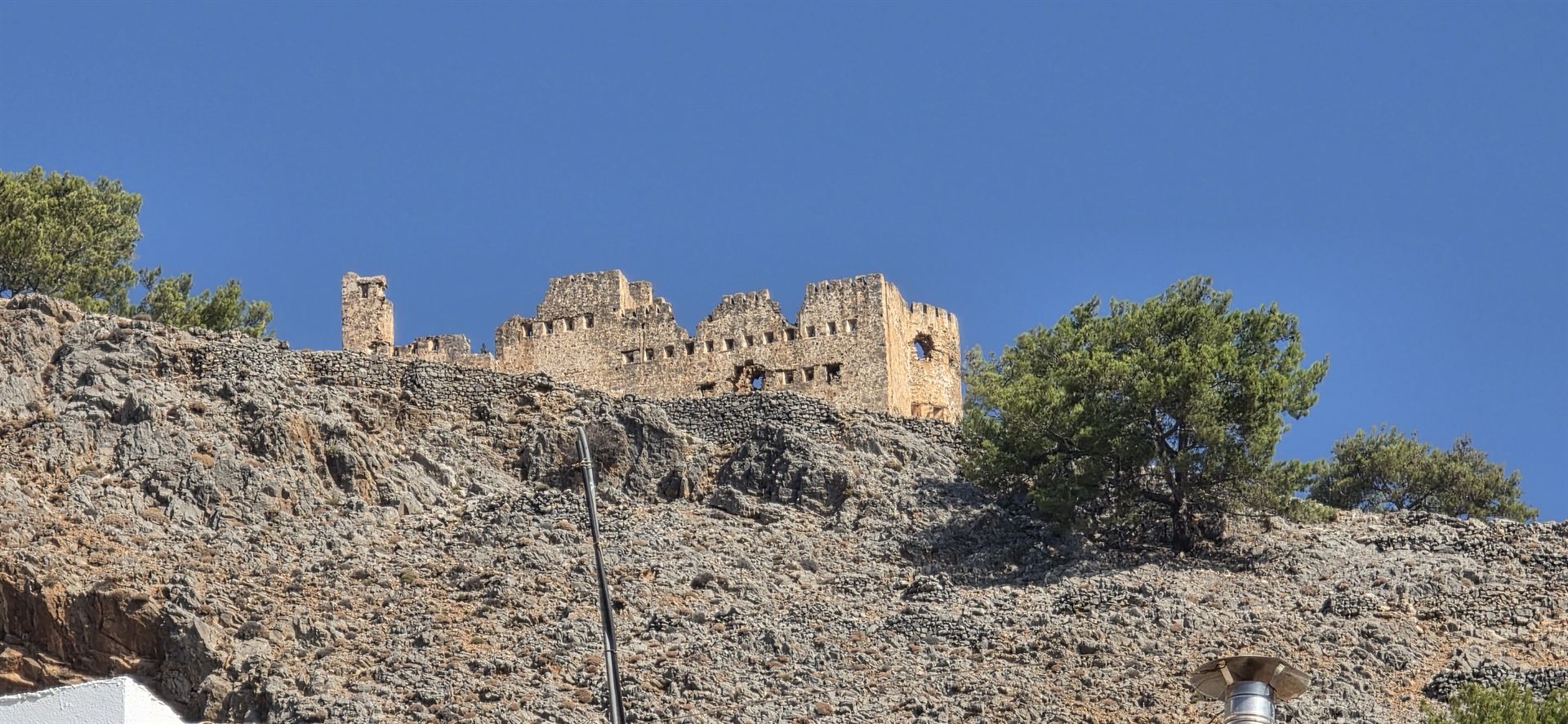
A Turkish castle stands guard on the ridge above the village, with old stone ruins and a chapel scattered along the shore.
Nights you don't forget
When the last ferry leaves, Agia Roumeli belongs to the few who stayed. There's no music pumping, no street lighting, no traffic — only the sea, the stars, and the full moon hanging over the island of Gavdos far out on the horizon. Some people camp on the beach and talk until dawn; others just sit, listen to the waves, and feel how far they are from everything. It's a wild kind of peace.
Walks & caves along the coast
The gorge is only the beginning. From Agia Roumeli, coastal paths lead east along the Libyan Sea to the tiny car-free village of Loutro, and on to Chora Sfakion (Sfakia) — past hidden coves, sea caves and beaches you can have almost to yourself. Bring good shoes, plenty of water, and a sense of adventure.
- Coastal walk to Loutro
- On to Chora Sfakion (Sfakia)
- Sea caves and quiet coves
- Swimming off near-deserted beaches
Getting here
There are only two ways in — and both are part of the adventure:
- On foot — hike the Samaria Gorge from the Omalos plateau down to the village.
- By ferry — boats connect Agia Roumeli with Chora Sfakion, Loutro and Sougia.
- Via Chania — most visitors travel through Chania, then by bus to the gorge or a ferry port.
What's around
Guests love Agia Roumeli for hiking and walking, the seaside, and simply slowing down.
🍽️ Tavernas & cafés
- Tavernas & mini-markets — in the village
- Farangi Samarias — 14 km
- Xyloskalo Restaurant — 14 km
- The Old Phoenix — 41 km
🏖️ Beaches
- Agia Roumeli Beach — 100 m
- Domata Beach — 4.8 km
- The Libyan Sea — ≈2 m from the rooms
✈️ Getting around
- Chania International Airport — 87 km
- Ferries: Sfakia, Loutro, Sougia, Palaiochora
- Languages spoken: Greek & English
Around the village
Click any photo to view it larger.